Your haircut is the first thing people notice before your suit, your handshake, or your business card. The right professional hairstyle projects competence, builds trust, and gives you a quiet edge in any room. Whether you’re heading into a corporate boardroom, a creative studio, or a hybrid Zoom call, this guide covers every style worth knowing in 2026.
From sharp tapers and clean crew cuts to groomed man buns and shoulder-length waves, professional haircuts for men span a wide spectrum today. The key isn’t always choosing the trendiest cut it’s finding one that fits your face shape, hair type, workplace culture, and daily routine. Below, we break down 27 office-ready styles, along with expert advice on maintenance, styling products, and how to communicate exactly what you want in the barber’s chair.
Short Professional Haircuts for Men
Short cuts remain the gold standard in professional settings. They’re low-maintenance, instantly polished, and work across nearly every industry. The best ones balance structure on top with clean, tapered sides a formula that has kept these styles relevant for decades.
1. The Classic Taper
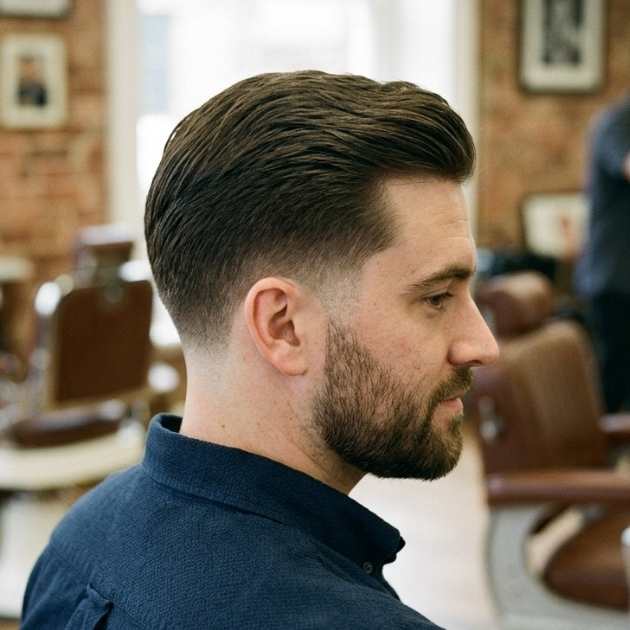
The classic taper is arguably the most versatile professional haircut available. Hair stays longer on top typically 1.5 to 3 inches and gradually shortens down the sides and back without any abrupt transitions. The result is structured but never stiff. It pairs effortlessly with a suit or a smart-casual blazer, and it works with straight, wavy, or lightly textured hair. Use a matte clay or light pomade to define the top without adding unwanted shine.
2. Crew Cut
Short, clean, and effortlessly masculine, the crew cut keeps hair uniform and close to the head, with slightly more length on top. Sides and back are trimmed with clippers while the top is scissor-cut for a refined finish. It requires minimal morning effort a quick finger-comb or a small dab of product is all you need. The crew cut reads as disciplined and confident, making it a favorite in finance, law, consulting, and the military.
3. Buzz Cut

The buzz cut is the ultimate low-maintenance professional option. A single clipper guard creates a uniform, cropped length across the entire head. There’s nothing to style, nothing to fuss over, and no bad hair days. Despite its simplicity, a well-maintained buzz cut projects confidence and decisiveness. It’s especially effective for men with thinning hair or a receding hairline, as it minimizes contrast and creates a cleaner overall silhouette.
4. Ivy League
Sometimes called the Princeton cut, the Ivy League is a refined evolution of the crew cut. The top is left long enough usually 1.5 to 2 inches to sweep to the side or comb forward. It’s inherently preppy and business-ready, bridging the gap between corporate formality and modern polish. Wear it parted for the boardroom, or run your fingers through it for a casual Friday look.
5. French Crop
The French crop features a short, blunt fringe that sits just above the eyebrows, with clipped sides that keep the silhouette tight. It’s popular in creative industries and modern offices where a slightly edgier look is acceptable. The fringe also does practical work it minimizes the appearance of a high or broad forehead. A small amount of matte paste gives it definition without making it look overdone.
6. High and Tight

Originating from military grooming standards, the high and tight features skin-close sides that extend high up the head, with a slightly longer section left on top. It communicates discipline and precision. While once associated exclusively with the armed forces, it has migrated confidently into corporate environments as a bold, no-nonsense choice that pairs sharply with formal attire.
7. Textured Crop
The textured crop is the modern update to the French crop. Layers are added to the top section to create movement and dimension, while the sides stay tight. It suits creative roles, tech environments, and hybrid workplaces. Unlike many professional cuts, the texture means it still looks intentional even on days when you skip the product. A lightweight styling clay enhances rather than flattens the natural movement.
8. Side Swept Crew Cut
A subtle twist on the classic crew cut, this version leaves just enough length on top to sweep to one side. The directional styling softens the look, making it feel more refined and less utilitarian. It suits men who want a crew cut’s practicality without its bluntness. A small amount of light-hold gel keeps the sweep in place through long office days without leaving residue or stiffness.
9. Short Brush Up with Taper Fade

This cut pairs a brushed-up top with a tapered fade on the sides, creating contrast and height without any volume that tips into casual territory. It’s a smart choice for men who want a modern edge while staying within professional guidelines. Use a blow dryer and a medium-hold clay to lift the roots before setting the style in place.
Related Post: Undercut Fade: 30 Bold & Modern Haircut Styles
Medium-Length Professional Men’s Hairstyles
Medium-length styles roughly 2 to 5 inches on top offer more styling flexibility without straying into high-maintenance territory. When kept neat and well-shaped, they project creativity and confidence in equal measure.
| Style | Length on Top | Best For | Key Product |
| Comb Over with Taper | 2–4 in | Corporate offices | Light pomade |
| Classic Side Part | 2–3 in | Business formal | Wax or mousse |
| Textured Quiff | 3–5 in | Business casual | Matte clay |
| Pompadour | 4–5 in | Smart casual | Pomade + blow dryer |
| Slick Back | 3–4 in | Formal settings | Gel or pomade |
| Mod Cut | 2–4 in | Creative offices | Light cream |
| Medium Flow | 3–5 in | Relaxed offices | Leave-in spray |
| Messy Brush Back | 3–4 in | Business casual | Hair cream |
10. Comb Over with Taper
The comb over with taper is one of the most universally corporate cuts available. Hair on top is swept cleanly to one side while the sides taper down progressively. The part can be defined with a comb or left slightly soft for a more modern finish. A lightweight pomade adds hold and subtle sheen without making the style look greasy or dated.
11. Classic Side Part
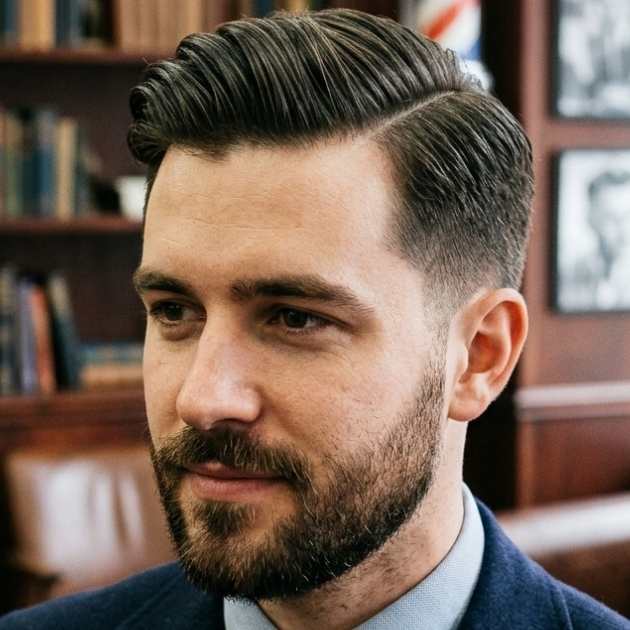
The side part is a gentleman’s essential it has been office-appropriate for over a century and still is. A clean line divides the hair on one side, with the longer section combed neatly across. The sides are trimmed but not aggressively short, giving it a more relaxed feel than a tight fade. It’s arguably the safest and most universally respected professional hairstyle across all industries.
12. Textured Quiff
The quiff lifts hair upward and slightly back from the forehead for a look that’s energetic without being flamboyant. The textured version avoids the stiff, heavily styled silhouette in favor of natural layers and movement. Blow-dry upward from the roots, then apply a flexible-hold clay to define without hardening. It adds height that can balance rounder or shorter facial structures nicely.
13. Pompadour
The pompadour lifts the front section of the hair high and sweeps it back, creating dramatic volume that commands attention. Modern versions incorporate a taper or fade on the sides to update the vintage silhouette for contemporary offices. A blow dryer, a round brush, and a medium-hold pomade are the core styling tools. The result is a genuinely striking professional look that’s hard to replicate with any other cut.
14. Slick Back
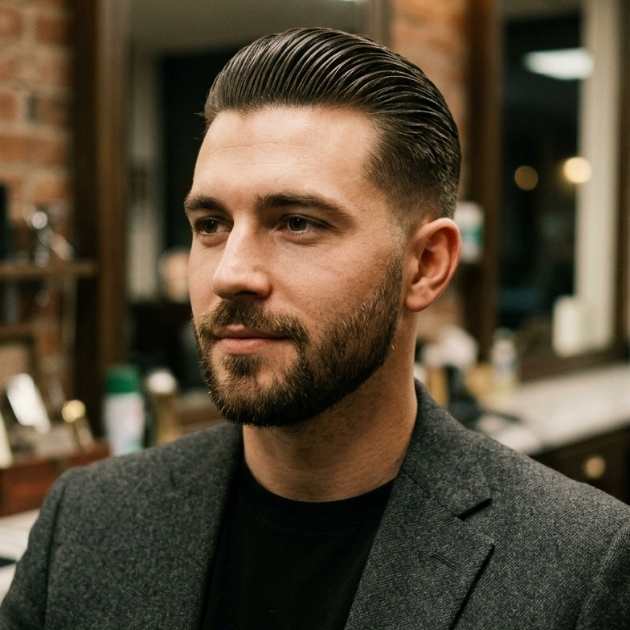
The slick back is clean, polished, and undeniably powerful. Hair is combed straight back from the forehead using a gel or pomade that holds it in place all day. Shorter sides blend in smoothly. High-shine pomades create a classic, retro-adjacent look; matte pomades deliver a more understated modern finish. Either way, it’s a strong choice for formal environments.
15. Mod Cut
Inspired by British 1960s style, the mod cut keeps medium-length hair all around with slightly more on top. It’s neat and stylish without being conservative, making it a strong option for creative directors, architects, and professionals in visual industries. A light styling cream maintains shape without overpowering the cut’s natural movement.
16. Medium Flow Style
The medium flow is for men who prefer low effort and natural results. Hair falls back or to the sides with minimal interference, creating a relaxed but put-together look. It’s popular in hybrid and remote-first workplaces where dress codes are less rigid. Daily brushing, a trim every four to five weeks, and a lightweight leave-in conditioner are all it takes.
17. Messy Brush Back (Clean Finish)
The messy brush back occupies the space between casual and polished. Hair is pushed backward without being slicked flat, producing a natural texture that looks effortless rather than undone. The key is keeping the ends trimmed and the sides clean otherwise it tips from artfully undone into genuinely messy. A hair cream with light hold is the ideal finishing product.
Long Professional Haircuts for Modern Men

Long hair can absolutely be professional the condition is always the same: it must be clean, well-trimmed, and deliberately styled. These five styles prove that length and polish are not mutually exclusive.
18. Man Bun (Tidy Version)
A neat man bun keeps long hair off the face and shoulders in a clean knot or low roll. The sides should be trimmed or faded to prevent the overall look from appearing unkempt. A small amount of smoothing serum tames flyaways and adds a polished finish. It works well in tech, media, design, and creative agencies, though it remains a risk in highly conservative environments.
19. Long Comb Over
The long comb over carries the classic side-swept structure into longer lengths. Scissor-trimmed or faded sides keep the cut sharp, while the longer top is combed or swept to one side for volume and definition. A matte or light-hold product prevents the weight of longer hair from making the style fall flat. It’s a strong option for men growing their hair out who still need to maintain a professional appearance.
20. Shoulder-Length Waves

Shoulder-length hair with natural waves strikes a balance between masculine ease and thoughtful grooming. Regular trims every five to six weeks keep the ends healthy and prevent the style from looking overgrown. A lightweight curl cream or wave-enhancing spray defines the texture without stiffness. This look works well in industries that value individuality: music, fashion, marketing, and entertainment.
21. Bro Flow (Groomed)
The bro flow is medium-to-long hair that falls naturally backward and to the sides. When groomed properly brushed daily, trimmed regularly, free of frizz it reads as relaxed confidence rather than neglect. A small amount of lightweight cream manages the texture, and clean ends make the difference between a styled flow and simply overgrown hair.
22. Half-Up, Half-Down
The half-up style ties the upper portion of long hair back while the rest falls freely. It keeps hair away from the face and gives a cleaner overall profile than fully loose long hair. A simple elastic or discreet clip secures the top section. The lower portion should stay brushed and free of tangles. This style translates naturally between desk work and client-facing meetings.
Best Haircuts for Specific Hair Types
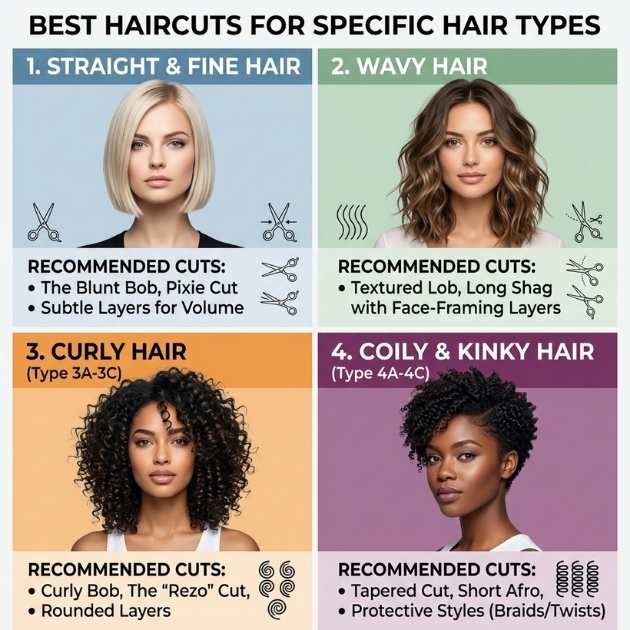
23. Professional Haircuts for Curly Hair
- A curly taper or cropped curl cut controls natural texture and keeps it defined
- Short sides with more curl volume on top create a balanced, professional silhouette
- Use a curl-defining cream to reduce frizz and enhance the natural pattern
- Trim every 3–4 weeks to prevent the curl from expanding into a shapeless mass
24. For Wavy Hair

- Medium cuts like the side part, textured quiff, or bro flow work beautifully with natural wave patterns
- A light styling cream or sea salt spray enhances the wave without weighing it down
- Regular trims keep the wave even and prevent bulky, unmanaged ends
25. For Thin or Thinning Hair
- A crew cut or short taper creates the illusion of fuller hair by keeping length uniform
- Avoid long styles that expose thinning areas through contrast or weight
- A lightweight volumizing product adds body without buildup
- Buzz cuts are excellent for men with significant thinning they look intentional, not apologetic
26. For Straight Hair
- Straight hair excels in structured cuts like the slick back, classic side part, and pompadour
- Gel or pomade provides the hold needed for flat, smooth styles to stay in place all day
- Keep ends trimmed to prevent the straight texture from appearing limp or flat
27. For Receding Hairlines
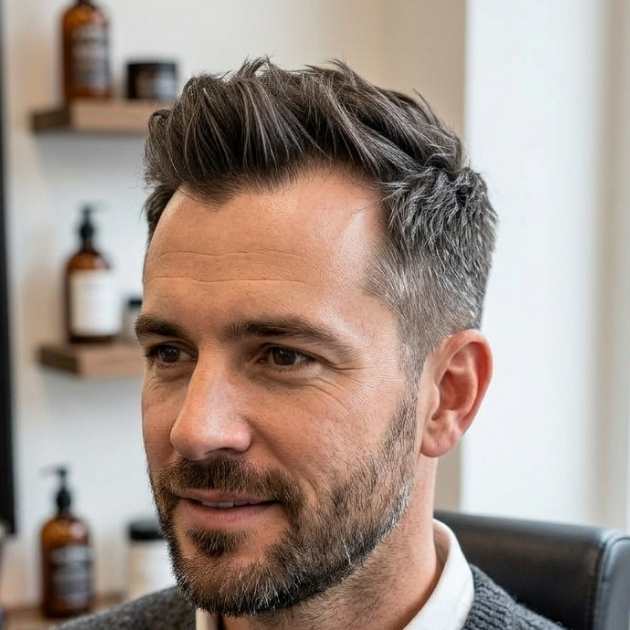
- A buzz cut or short taper reduces the visual contrast between hairline and scalp
- A textured crop or side part can be styled to minimize the hairline’s visibility
- Avoid volume-heavy cuts like high pompadours that draw attention upward
- Own the look with confidence a clean short cut always reads as a deliberate style choice
What Makes a Haircut “Professional” for Men?
1. Traits of a Professional Haircut
A professional haircut shares three qualities: it’s neat (clean lines, no overgrown sections), intentional (visibly styled, not thrown together), and appropriate (it doesn’t distract from the impression you’re trying to make). The cut should blend into your overall appearance, not compete with it.
2. Workplace-Appropriate vs. Trendy Styles
A useful rule: if your hair would be the first thing a new colleague or client notices about you, it’s probably too bold for a conservative setting. Trendy cuts undercuts, heavy fades, extreme texture can work in progressive offices when executed well, but they carry real risk in traditional industries. The sweet spot is a cut that’s current without being conspicuous.
3. Matching Haircuts to Industry & Work Culture
| Industry | Recommended Styles | Styles to Avoid |
| Finance / Law | Side part, taper, Ivy League, slick back | Undercut, heavy fade, man bun |
| Tech / Startups | Textured crop, bro flow, crew cut | Overly formal pompadour |
| Creative / Media | Most styles, including longer cuts | Overly severe military cuts |
| Healthcare | Buzz cut, crew cut, short taper | Anything past collar length |
| Education | Classic side part, taper, medium flow | Bold fades, extreme texture |
How to Choose the Right Professional Haircut for You?
Face Shape Considerations (Oval, Round, Square, etc.)
Face shape is your most important variable. Oval faces are the most versatile almost any style works. Round faces benefit from height on top (quiffs, brush-ups) that elongate the face. Square faces suit softer edges and side-swept styles rather than harsh geometric cuts. Oblong faces do well with styles that add width at the sides rather than additional height. When in doubt, bring a reference photo to your barber and ask for an honest assessment.
Matching Style to Lifestyle & Job
A great haircut respects your morning routine. If you have seven minutes before catching a train, a slick pompadour is a bad idea a taper or crew cut is a good one. Conversely, if you work from home and enjoy the ritual of styling, a textured quiff or comb over gives you creative satisfaction without any professional risk. Match your cut to the life you actually live, not the life you’d like to have.
When to Ask for a Barber vs. a Stylist
- Barber: Short and medium cuts, fades, tapers, beard shaping, precise clipper work
- Hair stylist: Longer cuts, layering, texturizing, color, scalp treatments
- For most professional short cuts, a skilled barber will deliver superior results they specialize in the structure and precision these styles demand
Maintenance & Styling Tips for a Professional Look
Must-Have Hair Products for Men
- Matte clay best for textured cuts; adds definition without shine
- Light pomade ideal for side parts, comb overs, and slick backs
- Styling cream excellent for medium-length styles and natural finishes
- Lightweight gel keeps structured cuts in place on long or active days
- Leave-in conditioner or spray essential for longer styles and wavy hair
Daily Grooming Routine
- Wash hair 3–4 times per week (daily washing strips natural oils from most hair types)
- Towel dry to around 80% dampness most products apply best to slightly damp hair
- Apply a pea-sized amount of product and work it through from roots to ends
- Use a comb or brush to shape the style in your intended direction
- Set with a light hairspray if you need extra hold for long or active days
How Often to Get a Trim
- Short cuts (buzz, crew, taper): every 2–3 weeks
- Medium-length styles: every 3–4 weeks
- Longer styles: every 5–6 weeks
Waiting longer doesn’t save money it costs you the shape that made the cut look sharp in the first place.
Tools Every Man Should Own
- A quality wide-tooth comb and a fine-tooth comb for different styling needs
- A boar-bristle brush for smoothing and distributing natural oils
- A compact hair dryer with a concentrator nozzle for directional styling
- A set of clippers for DIY touch-ups between barber visits
Beard + Hair Combinations that Work
| Haircut | Beard Pairing | Overall Effect |
| Classic Taper | Short stubble or clean shave | Sharp and refined |
| Crew Cut | 3–5 day stubble | Strong and masculine |
| Slick Back | Clean shave or short beard | Polished and powerful |
| Man Bun | Medium beard, well-shaped | Confident and modern |
| Textured Quiff | Light stubble | Youthful and stylish |
FAQs
What is the most popular professional men’s haircut in 2026?
The classic taper and comb over with taper fade are the most requested professional cuts in 2026 versatile, low-maintenance, and appropriate in virtually every office environment.
Can I have long hair and still look professional?
Yes provided it’s clean, trimmed regularly, and styled with intention. A neat man bun, groomed bro flow, or tidy half-up style meets professional standards depending on your industry.
How do I ask for a specific haircut at the barber’s shop?
Bring a reference photo and describe three things: length on top, fade or taper height on the sides, and your preferred finish (matte, natural, or glossy).
What styles work best for remote or hybrid workers?
The textured crop, crew cut, and medium flow all look polished on video calls without requiring heavy styling effort every morning.
How do I transition from casual to professional styles?
Start with a classic taper or side part clean and structured without being extreme. Over a few visits, your barber can refine the cut as you settle into the professional aesthetic.
Final Thoughts
Choosing a Professional Haircuts for Men is one of the most practical investments a man can make in his appearance. The right cut doesn’t just make you look sharper it removes a variable from your morning routine, strengthens your first impressions, and reinforces the image you’re working to project in your career. Whether you gravitate toward a classic taper’s understated polish or a groomed bro flow’s relaxed confidence, the goal is always the same: intentional, well-maintained, and appropriate to your context.
Take the time to identify your face shape, understand your workplace’s culture, and choose a barber or stylist who listens and executes precisely. Pair your cut with the right products, maintain a consistent trim schedule, and your hair will always work for you rather than against you. In professional life, the details compound and a great haircut is one of the easiest details to get right.

